




About the program
Sustainable Agricultural Mechanization (SAM) has great potential to contribute to the growth and modernization of the agricultural sector in Sub-Saharan Africa (SSA) along the value chain. However, the use of mechanization technologies and entrepreneurial skills is still very low. Moreover, many smallholder farmers often do not have the necessary capital nor access to long-term credit to invest in required farm machinery which helps them increase their land and labour productivity, increase their incomes and improve their livelihoods. Poorly selected or wrongly used machinery can, in addition to increasing utilization cost, damage the soils and actually reduce their potential. Farmers, therefore, need access to appropriate quality mechanization services to enhance their production and significantly contribute to sustainable conservation or improvement of soil quality and its water retention capacity. It is for this reason that AUC, FAO, ACT and other partners advocate for sustainable agricultural mechanization and enhanced access to mechanization services by smallholder farmers in Africa. The joint efforts are undertaken to operationalize Sustainable agricultural mechanization – A framework for Africa (F-SAMA). This is only possible if the right human resources skilled enough to support the sector at all levels is in place. It is thus vital to strengthen capacity of private and public-sector technology development and transfer organizations, as they play a key role in the process of developing and transferring SAM technologies.
Overview : MSP capacity building program
The implementation of sustainable agricultural mechanization is an ongoing challenge in SSA, due largely to limited capacity and a lack of enabling conditions. Another hurdle is the inaccessibility (or a lack of awareness) of the considerable body of existing knowledge on, and experiences in, the implementation of SAM. There is lack of records, and objective and balanced analysis of past experiences (successful and/or failed programmes) to draw useful lessons to inform policy and planning. To help overcome this latter problem, the AfricaMechanize platform www.africamechanize.org has been established to support capacity development in the sector with strategic involvement of ministries (of agriculture, education and science and technology), trade and industry, farmer organizations, and private- and public-sector agrifood supply chain stakeholders, in addition to those working in the agricultural machinery and implement supply chains.
Sustainable agrifood technologies and practices are relatively new in many parts of SSA; in contrast, the curricula of higher education and training institutions tend to be quite static. New areas of knowledge, such as precision farming and conservation agriculture are emerging and need to be mainstreamed. Finally, capacity development is essential at all levels, from farmers through to artisans, technicians and professional managers, in addition to policy and planning experts.
The systemic capacity development (at the individual entrepreneur, partner institution, and policy/strategy levels) contributing to F-SAMA Element 8: Human resources development and capacity building for SAMA. Furthermore, the identification, capacity development and networking of the agricultural mechanization service providers (MSP) support institutions across Africa presents a unique entry point for institution building, thus an expected contribution to Element 10: Creating sustainable institutions for regional cooperation and networking. In the overall, these activities will also contribute to Element 1: Boosting Farm Power through appropriate technologies and innovative business models.
Goal and Objectives: MSP capacity building program
The main objective of the MSPs course is to raise awareness among the agri-food machinery players on the opportunities offered in sustainable agricultural mechanization service provision, build capacity of MSPs to enhance their service provision and improve access to mechanization services by smallholder farmers. This will also enhance their understanding about Conservation Agriculture technology and practices and how to do quality mechanization service provision as business.
The core approach to capacity building of MSPs is anchored on the identification, supporting and strengthening of partner institutions at the grassroots and national level that will ultimately be responsible for the MSP operator trainings and the cluster-based support services. In addition to strengthening of the local partners, the training of the Trainer of Trainers (ToTs) at the partner level are supported using approved training materials and curricular, leading to certification of qualified ToTs by AfricaMechanize. The ultimate goal is to ensuring continued provision on the capacity development training services in the short and medium term. Initial considerations include: (a) involvement of the for-profit mechanization services providers that have a business interest to keep providing the services, (b) support from national governments, development partners and philanthropy mitigating the effects of CSA and pandemics, (c) strategic interventions on productivity enhancing CSA technologies (conservation agriculture-based mechanization), and technologies reducing food spoilage and wastage.
MSPs Course Module
The course is designed to cover a range of topics organized in six modules. These modules have been developed with emphasis on developing skills on SAM thematic areas using adult and participatory learning techniques. However, the training content and structure can be customized based on the needs and machinery particularities of the target value chain(s). The course encompasses the following modules:
MODULE 1 : INTRODUCTION TO HIRE SERVICES AS A BUSINESS ENTERPRISE
Module 1: Introduction to hire services as a business enterprise
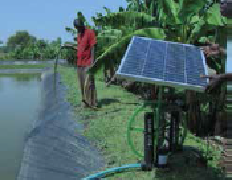
This module provides introduction and an overview of a hire service as a business enterprise. The foci of the training are on the commercial sustainability of the enterprises providing mechanization services to farmers including the small-scale ones. It also introduces sustainable agricultural mechanization: a vital input for smallholder farmers in the context of sustainable crop intensification, and in particular Conservation Agriculture.

MODULE 2: INTRODUCTION TO CONSERVATION AGRICULTURE
Module 2: Introduction to Conservation Agriculture
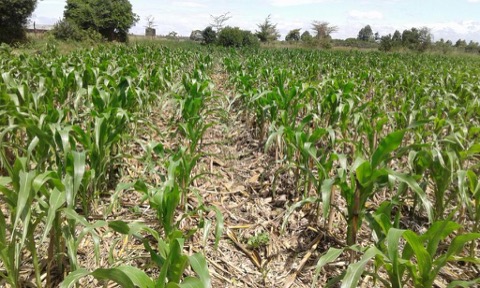
The module introduces trainees to various aspects of Conservation Agriculture in the context of sustainable crop production intensification and SAM. The proven undesirable and detrimental features of conventional tillage practices – notwithstanding practiced on more than 95% of the farmed area in Africa – are exposed and compared to alternative CA-based climate smart practices. Furthermore, the module emphasises on farming as business.

MODULE 3: UNDERSTANDING THE LOCAL PRODUCTION ENVIRONMENT AND MARKET
Module 3: Understanding the local production environment and market.
The module provides an overview of the importance of a local area and market assessment. It provides a practical, simple and easy-to-use assessment method to enable the owners/managers of hire service businesses to better understand the local context in which they work, or intend to work. Understanding the market entails identifying potential customers, setting prices for services offered and understanding the competitive environment. An assessment of the local area and market aims at appreciating the potential market for any service offered and to understand what services are available to support the mechanization provision business efficiently and profitably.
MODULE 4: SELECTING APPROAPRIATE MACHINERY - TECHNICAL AND FINACIAL ASPECTS
Module 4: Selecting appropriate machinery: technical and financial aspects.
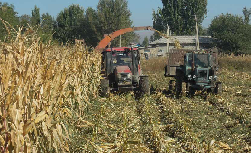
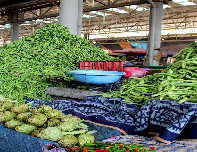
The module deals with the technical and financial aspects of machinery selection. It introduces the steps required for selecting power sources (both tractors and draught animals) and implements for specific tasks. The module imparts the skills required to understand the importance of selecting power sources and implements. Through an analysis of farming systems and other factors (e.g. costs, customers and priorities), it equips participants to make optimal selections of appropriate power sources and implements, helping them to identify critical factors and understand power sources and implement performance in the field.
MODULE 5: OPERATION AND MAINTENANCE OF AGRICULTURAL EQUIPMENTS FOR HIRE SERVICE BUSINESS
Module 5: Operation and maintenance of agricultural equipment for hire service businesses.
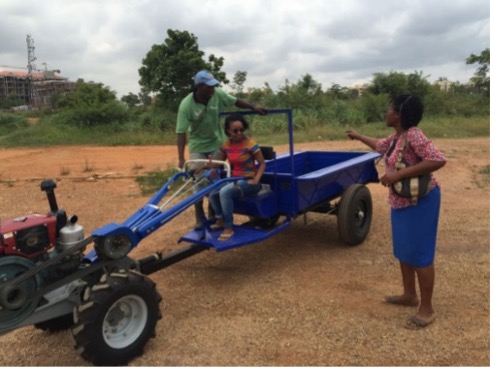
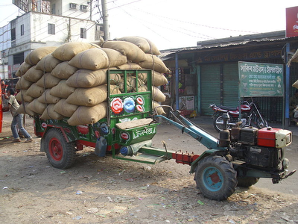
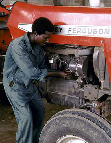
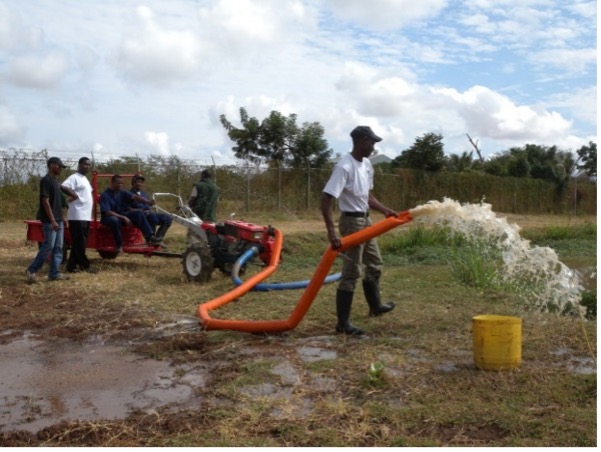
The module covers the general aspects of operation and maintenance of the power sources and machinery most likely to be used in a hire service business. The focus is on tractors (both two-wheel, 2WT, and four-wheel, 4WT), draught bovines, sprayers, planters, post-harvest equipment and pumps. The range of machinery may be expanded according to its relevance to the prevailing situation. A hands-on practical approach is recommended, as are visits to commercial machinery suppliers and workshop facilities. The module covers a wide range of topics related to the operation and maintenance of agricultural equipment
MODULE 6: MANAGING THE HIRE SERVICE AS A BUSINESS
Module 6: Managing the hire service as a business – including digitalization in supporting the management of operations of the hire service business.
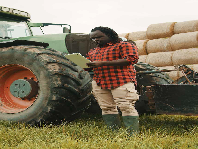
The module covers four basic areas which include: Entrepreneurship and management in the hire service business; Hire service business organization; Managing hire service business operations, and Managing financial aspects of the hire service business. Managing a hire service involves diagnosis, planning, organization, leadership and control – running the business and its services in a way that is environmentally friendly.


MSP E-learning Courses
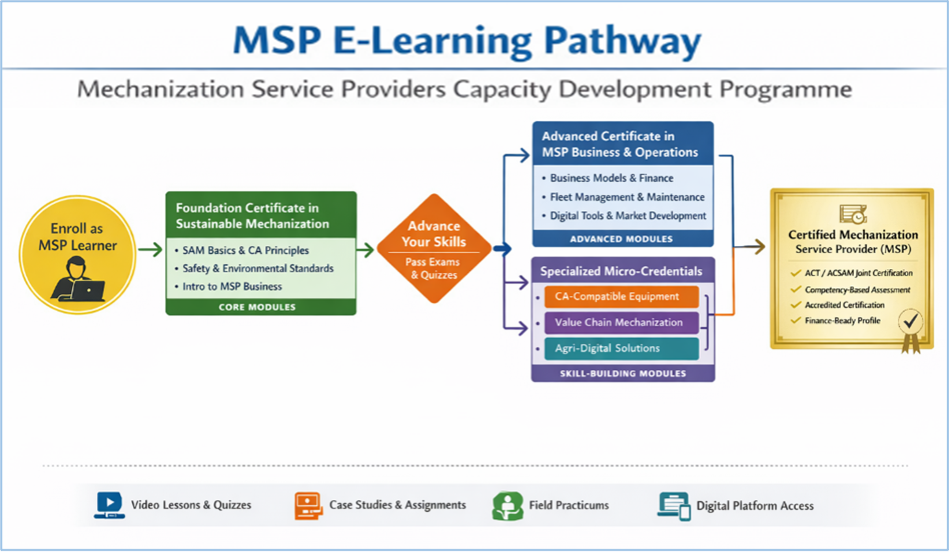
MSP E-learning Courses have been designed by SAM key partners (FAO) to support build a professional, profitable, and sustainable cadre of Mechanization Service Providers (MSPs) capable of delivering climate-smart, CA-compatible mechanization services to smallholder farmers.
The courses are designed for flexible, low-bandwidth, modular learning, combining theory, practical field application, and certification.
Explore the available SAM-based e-learning courses as developed by Platform Partners: https://www.africamechanize.org/e-learning-courses/
MSPs Training Toolkit
The MSPs training Toolkit is a comprehensive package of tools, best practices and examples of their application. It serves as a valuable resource for a wide range of users, especially public and private service providers, as well as the staff of extension services and civil-society, non-governmental and private-sector organizations with roles in promoting SAM.
The MSPs Toolkit brings together a wide range of guidelines, manuals, knowledge products, case studies and other tools produced by FAO, ACT and its partners, as well as by other organizations and by member countries. Some of these tools, materials and guide that support the trainers of MSPs are available in the link: https://drive.google.com/drive/folders/1osZZazgzRdm-QA6lLmFn24Frrnj-95xX?usp=drive_link
