News & Events
Directions for Investments in sustainable agricultural mechanization with Conservation Agriculture
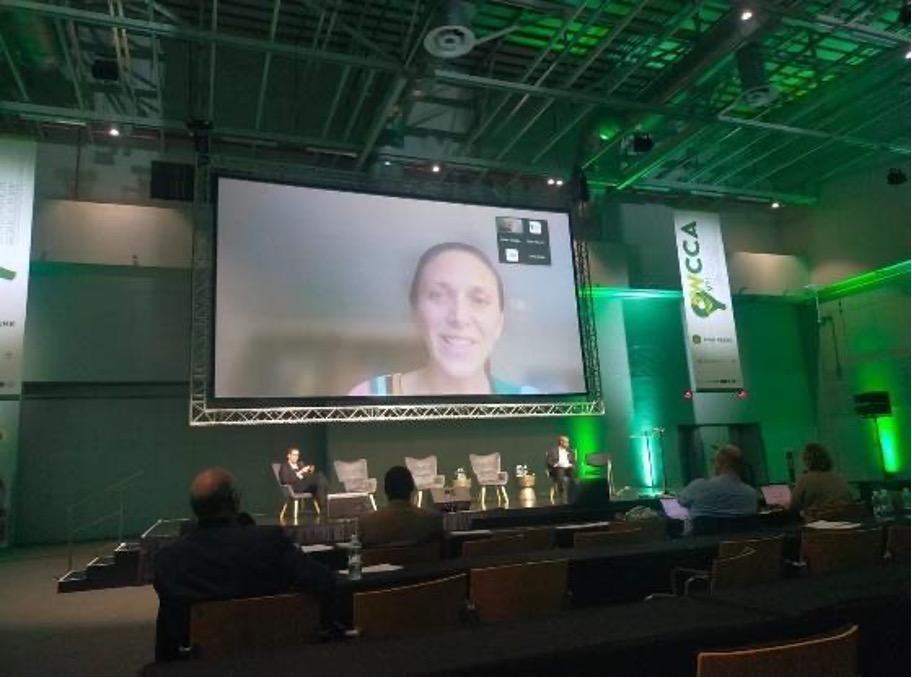
At the thirteen (13th) AfricaMechanize webinar organized and held on 23rd July, 2024, as a special plenary session at the Ninth World Congress on CA (9WCCA). Dr. Katie started off by providing a brief background about the CA & mechanization issues from the World Bank perspective. Increasing agrifood activities to feed a growing population increases GHG emissions, which contribute to global heating, which in turn decreases agricultural yields, which leads to more agrifood activities to compensate for the losses, and yet more emissions. In effect, we’re chasing a moving target that we are shifting through our own actions. We need to break this vicious circle through both mitigation and adaptation action and create a sustainable food system that both feeds the world and heals the planet.
The World Bank follows a CSA approach for achieving a sustainable food system transformation:
• Mitigation: reduce emissions and emission intensity of food production, minimize food loss and waste, and support sequestration.
• Adaptation: adjust the food system in response to, or in anticipation of, climatic changes to reduce the harm, or even benefit, from these.
• Productivity: Enhance the yield (output) per unit of input—'produce more with less.'
With the urgent need to sustainably transform our global food systems, the World Bank has increased its support for climate-smart practices such as conservation agriculture, which contribute to a reduction in GHG emissions through the efficient use of resources and carbon sequestration. The World Bank’s Agriculture and Food Global Practice’s share of project financing that contributes to climate change mitigation or adaptation has steadily increased from $326 million in FY13 to $3 billion in FY23
The Bank also tracks the number of farmers who adopt improved agricultural technology as a result of World Bank project support, and this aligns with the promotion of conservation agriculture. Additionally, the IFC’s new climate-smart agriculture (CSA) strategy under the World Bank’s Climate Change Action Plan (2021–2025) focuses on improving productivity through precision farming and conservation agriculture. In summary, the World Bank promotes conservation agriculture as part of sustainable landscape management practices and supports the adoption of improved agricultural technology by farmers.
In particular, the World Bank is undertaking various interventions and activities in Africa. Some of the projects include the Korean Green Growth Trust Fund (KGGTF) project initiated with the objective to mainstream inclusive green growth throughout WB operations and identify and implement innovative, technical, and operational solutions to specific development challenges. In this case the bank is working with ACT to promote Sustainable Agricultural Mechanization in West Africa. This Go Smart mechanization project aims to expand smallholder farmers’ access to SAM technologies, services, and information in West Africa. Piloted in Ghana, aiming to benefit all FSRP countries and spill over to all of West Africa. Partners working with the bank in this project include ACT, AICCRA, FAO, CSIR, ECOWAS, CORAF, CNTA, and TroTro, among others.